Friday, April 28, 2023

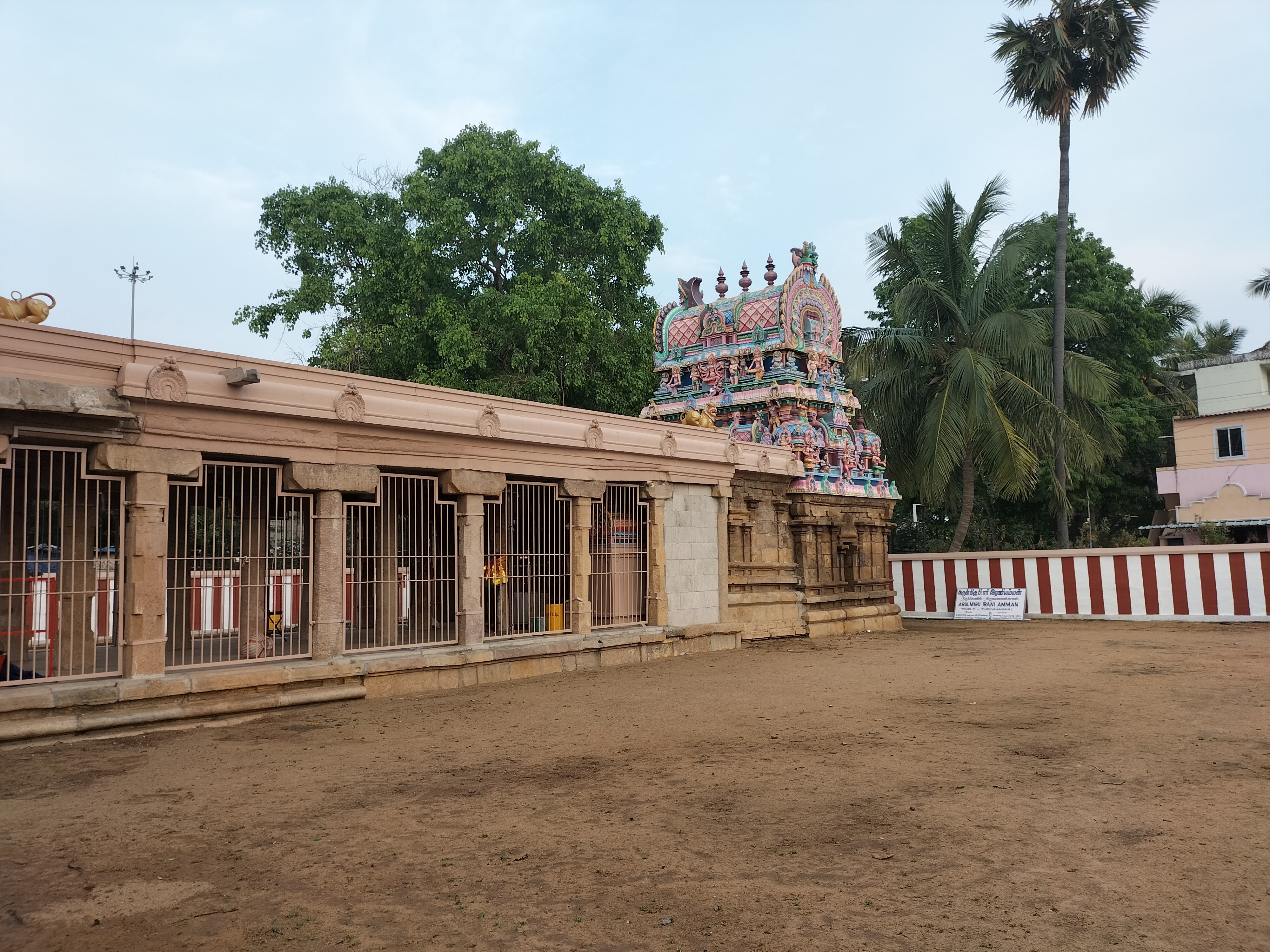
அருள்மிகு பிடாரி இரணியம்மன் கோயில்.

திருவானைக்கா எல்லை காவல் தெய்வம் இரணியம்மன். ஆனைக்கா கோயிலின் தென்கிழக்குப் பகுதியில், திருநீற்றான் மதிலுக்கு வெளியில் இவ்வாலயம் அமைந்துள்ளது. சிறிய கோயில். எனினும் மிகவும் அழகான, அமைதியான கோயில். 

வாசலில் குபேர கணபதி.

அதைத் தாண்டியதும் உடைந்த மதில். அதற்கு அருகில் பாதை போட்டுள்ளனர்.


பலிபீடம் உள்ளது; அதற்கு அடுத்து நுழைவாயில். 


வலம் வரும்போது மணல் வெளியில் சப்பாணி கருப்பர், சங்கிலி ஆண்டவர், காத்தவராயர், தங்கையாள், மதுரைவீரன் ஆகியோர் உள்ளனர். அய்யனாரின் குதிரை வாகனம் உள்ளது. அதற்கு எதிரில், சற்றுத் தள்ளி ஐயனார் சந்நிதி (வலம் வரும்போது பார்ப்போம்).


தொடர்ந்து நடக்கையில் கோயிலுக்குரிய கிணறு உள்ளது. கிணற்றில் தண்ணீர் இருக்கிறது. கோயிலின் மழைநீர் சேகரிப்பு அமைப்பு இக்கிணற்றில் விடப்பட்டுள்ளது.

தொடர்ந்து வருகையில், இரணியம்மன் கருவறையின் பின்புறம் வருகிறது. சற்று முன்னே செல்ல, கணபதி சந்நிதி. 


தொடர்ந்து மணல் வெளியில் நடக்க ஐயனார் சந்நிதி (முன்பே அறிமுகமானது). அதற்கு அடுத்து, தலமரமாக தற்போது இருக்கும் மருத மரம். ஆலமரமும் முன்பு இருந்தது; தற்போது இல்லை என்று அர்ச்சகர் தெரிவித்தார். மருதமரத்தின் அடியில் விநாயகர், நாகர், கிராம தேவதைகளின் சிலாரூபங்கள் (பழுதானவை) உள்ளன. இதற்கு அடுத்து பேச்சியம்மன் சந்நிதி உள்ளது.


இப்போது மூல தெய்வம் இரணியம்மன் சந்நிதி இருக்கும் மண்டபம் நோக்கிச் செல்கிறோம். நுழையும் போதே தேவியின் சிம்மம் நம்மை வரவேற்கிறது. உள்ளே செல்கிறோம்.

இரணியாசுரனை சம்ஹரிக்கும் கோலத்தில் அம்பாள் பெரிய வடிவோடு இருந்தாலும் பக்தர்களை இன்முகத்தோடு, முகத்தில் குறுநகை ததும்ப காட்சி அளிக்கிறாள்.

தரிசித்த பின், நமஸ்கரித்து விட்டு, மன நிறைவோடு திரும்புகிறோம்.


Friday, January 24, 2020

Satsangam - Thai Amavaasai post

வணக்கம்.

இன்று (24-01-2020), வெள்ளிக்கிழமை, தை அமாவாசை இரண்டும் சேர்ந்த புனித நாள்.

அரசன் ஒருவன், "இன்று என்ன நாள்?" என்றான், அம்பிகையை தியானித்துக் கொண்டிருந்த அபிராமி பட்டர், "இன்று பௌர்ணமி" என்று சொன்னார். கோபம் கொண்ட அரசன், "இன்று மாலை, நிலவு வருமா?" என்றான் அரசன். அம்பிகையின் பூரண சந்திர வதனத்தை, மனக்கண்ணில் கண்டு வந்த பட்டரோ, "அதற்கு என்ன? நிலவு வரும்." என்றார். ஒருவேளை நிலவு வரவில்லை எனில், தண்டனைக்கு உரியவனாவாய் என்றான் அரசன்.

மாலை வேளை வந்தது. வானில் நிலவு வரவில்லை. அபிராமி பட்டருக்கு, எல்லாமே அம்பிகை தான். அவர் வாயில் இருந்து வந்த வாக்கும், அந்த வாக்தேவியின் வாக்கே என்று நம்பிக்கை கொண்டிருந்தார். அன்னை அபிராமியை வணங்கி, பாடல்களைப் பாடத் தொடங்கினார். அப்பாடல்களே அபிராமி அந்தாதி. 79 ஆவது பாடலைப் பாடினார்.

விழிக்கே அருள் உண்டு, அபிராம வல்லிக்கு, வேதம் சொன்ன
வழிக்கே வழிபட நெஞ்சு உண்டு எமக்கு, அவ்வழி கிடக்க,
பழிக்கே சுழன்று, வெம் பாவங்களே செய்து, பாழ் நரகக்
குழிக்கே அழுந்தும் கயவர் தம்மோடு, என்ன கூட்டு இனியே?

இப்பாடலின் பொருள்:

அபிராமியின் விழிகளில் என்றும் அருளுண்டு. வேதமுறைப்படி அவளை வழிபட எனக்கு நெஞ்சமும் உண்டு. அப்படி இருக்க, பழியையும், பாவத்தையுமே விளைவித்து, பாழ் நரகக்குழியில் அழுந்தி வாடும் பேதையர்களோடு எனக்கு இனித் தொடர்பு வேண்டுமா? வேண்டவே வேண்டாம்.

இப்பாடலைப் பாடியதும், அன்னை, தன் அணிகலன் ஒன்றைக் கழற்றி, வானில் வீச, முழு நிலவாய், மாலை வானில் மிளிர்ந்தது. அரசன் முதலிய அனைவரும் அதிசயித்தனர். பட்டரின் விழியும் மனமும் குளிர்ந்தது.

ஸத்ஸங்கம் (நல்லாரோடு கூடுதல், சேர்தல்) என்பது எவ்வளவு முக்கியம் என்பதை வலியுறுத்தும் பாடலாக எனக்குத் தோன்றுகிறது. ஆதி சங்கரர், பஜ கோவிந்தம் ஸ்தோத்திரத்தில்,

ஸத்சங்கத்வே நிஸ்சங்கத்வம்
நிஸ்சங்கத்வே நிர்மோஹத்வம்
நிர்மோஹத்வே நிஸ்சலதத்வம்
நிஸ்சலதத்வே ஜீவன்முக்தி:

என்கிறார்.

ஸத்சங்கத்தில் இருந்தால் பற்றை விடலாம். பற்றை விட்டால் அழிவு வராது. அழிவு இல்லை எனில், அறிவு வரும். அறிவு வந்தால், முக்தி பெறலாம்.

திவ்ய ப்ரபந்தம் - முதல் திருவந்தாதி, பொய்கை ஆழ்வார் எழுதியதில், பத்தாம் திருமொழி, ஐந்தாம் பாடலில்,

நா வாயில் உண்டே நமோநாரணா என்று
ஓவாது உரைக்கும் உரை உண்டே - மூவாத
மாக்கதிக்கண் செல்லும் வகை உண்டே, என்னொருவர்
தீக்கதிக்கண் செல்லும் திறம்.

நம் வாயில், நாக்கு உள்ளது. அதனால் "நமோ நாரணா" என்று பகவன் நாமத்தை, மந்திரத்தைச் சொல்லக்கூடிய திறம் உண்டு. மாறுதல் (அழிவு) இல்லாத நல்ல வழிக்குச் செல்லும் வழியும் உண்டு. அப்படி இருக்க, தீய வழியில் எதற்காக ஒருவர் செல்ல வேண்டும்? அப்படி விழும் அவர்கள் திறமைத்தான் என்னே!

என்று பாடுகிறார்.

ஆண்டாள் நாச்சியாரும், திருப்பாவைப் பாடல்களில், கூடி இருந்து குளிர்ந்தேலோர் எம்பாவாய் என்று கூடாரை வெல்லும் சீர் பாடலில் பாடுகிறார். சங்கத் தமிழ் மாலை என்றே சொல்கிறாள். சங்கம் என்றால் கூட்டம். எல்லோரும் சேர்ந்து, இறைவனை வழிபட்டு, பெற்ற பேற்றினைப் பற்றிப் பாடுகிறாள். பகவத் கைங்கர்யம் என்பதே அந்தப் பேறு.

எல்லாரும் ஒன்று சேர்ந்து, நல் வழியில் செல்ல வேண்டும் என்று தான் நம் பெரியோர்கள், முன்னோர்கள் சொல்லி இருக்கிறார்கள். அவர்களது வாக்கைப் புரிந்து கொண்டு, நல்ல வழியில் நாமும் சேர்ந்து செல்வோம்.

ஸத்சங்கம் எல்லாருக்கும் கிட்ட, இறைவன் அருள் வேண்டி,
சரண்யா

Monday, May 20, 2019

Sri Krishna Kathaamrutham

Sri Krishna Kathaamrutham by - Smt. Yogita Nagarajan - Pravachana Natyam performed on 18-May-2019, 6.30 PM to 8.30 PM at Sri Saraswathi Gana Sabha, Kumbakonam. An excellent programme. New of its kind. Bharathanatyam blended with Hari Katha. Keeping Sree Oothukkadu Venkata Kavi's compositions on Lord Krishna as the core, it was a memorable evening. Enchanting vocal by Ms. Arya Nagarajan (younger daughter of Yogita) - deep and sweet voice gave a strong foundation to the programme. Nattuvangam by Ms. Prasiddha Nagarajan (elder daughter of Yogita) maintained the tempo of the programme. Sri Satish Kumar (Arya, Prasiddha's guru) on the violin and Sri Venkatasubramaniam on the Mridangam provided able support to swara - laya of the programme. Smt Yogita, demonstrated each and every song sung by means of Abhinayam and brief talk. Her effort needs special appreciation. Everything was perfect and clear. Audiences were kept spell bound and were quite eager to know what is next after the conclusion of each song. Here are the YouTube links of the full programme. Please do watch and share the same with your friends. Don't miss to watch. Part 1/3:
https://www.youtube.com/watch?v=THegTiAtxKQ Part 2/3: https://www.youtube.com/watch?v=mphTR8LjHlI Part 3/3: https://www.youtube.com/watch?v=qd7L1sPU2WI

Thursday, February 14, 2019

ஆழ்வார்கள் நால்வரின் பாடல்களில் உள்ள ஒற்றுமை

பொய்கை ஆழ்வார், பூதத்தாழ்வார், பேயாழ்வார் ஆகியோர் முதல் ஆழ்வார்கள் மூவர் என அழைக்கப்படுவார்கள். ஒரே காலத்தில் வாழ்ந்தவர்கள். திருமழிசை ஆழ்வார் அவர்களும் இம்மூவர் காலத்தைச் சேர்ந்தவர் என்று நம்பப்படுகிறது.

பொய்கை ஆழ்வார் காஞ்சிபுரத்திற்குப் பக்கத்தில் உள்ள திருவெக்கா என்னும் தலத்தில் அவதரித்தவர்.
பூதத்தாழ்வார் திருக்கடல்மல்லை என்னும் மகாபலிபுரத்தில் அவதரித்தவர்.
பேயாழ்வார் திருமயிலையில் அவதரித்தவர்.

இம்மூவரும் திருக்கோவலூர் என்னும் தலத்தில் ஒருவரை ஒருவர் சந்தித்தனர். ஒவ்வொருவரும் திருமால் மேல் நூறு பாடல்கள் (அந்தாதியாக) பாடினார்கள். முறையே முதல் (1), இரண்டாம்(2) மற்றும் மூன்றாம் (3) திருவந்தாதி என அழைக்கப்படும்.

திருமழிசை ஆழ்வார், சென்னை - திருவள்ளூர் இடையே அமைந்திருக்கும் தலமான திருமழிசை என்னும் ஊரில் அதே காலகட்டத்தில் அவதரித்தவர். திருச்சந்த விருத்தம் என்னும் 120 பாடல்களையும், நான்முகன் திரு அந்தாதி என்று 96 பாடல்களையும் பாடியுள்ளார். நான்முகனை என்று அந்த தொகுப்பு தொடங்குவதால், நான்முகன் திருவந்தாதி என்று கூறப்படுகிறது. நாலாம் (4) திருவந்தாதி என்றும் கூறுகிறார்கள்.

முதல் ஆழ்வார்கள் ஒருவரை ஒருவர் சந்தித்துக்கொண்டனர். ஆனால் திருமழிசை பிரான், இவர்களைச் சந்தித்தாரா என்பது தெரியவில்லை.

பொய்கை ஆழ்வாரின் முதல் திருவந்தாதியில், பத்தாம் திருமொழியில் உள்ள ஒன்பதாவது பாடலின் (1.9.9) முதல் இரண்டு வரிகளும், பேயாழ்வாரின் மூன்றாம் திருவந்தாதியில், நான்காம் திருமொழியில் உள்ள பத்தாவது பாடலின் (3.4.10) முதல் இரண்டு வரிகளும் மற்றும் திருமழிசை ஆழ்வாரின் நான்முகன் திருவந்தாதியில், ஒன்பதாம் திருமொழியின் ஆறாம் பாடலின் (4.9.6) முதல் இரண்டு வரிகளும் ஒரே வரிகளாக உள்ளன. முறையே கீழே பார்ப்போம்.

பொய்கை ஆழ்வார் - முதல் திருவந்தாதி - 10 ஆம் திருமொழி - பாடல் 9

உளன்கண்டாய் நன்னெஞ்சே உத்தமன் என்றும்
உளன்கண்டாய் உள்ளுவார் உள்ளத்து - உளன்கண்டாய்
வெள்ளத்தின் உள்ளானும் வேங்கடத்து மேயானும்
உள்ளத்தின் உள்ளனென்று ஓர்

பேயாழ்வார் - மூன்றாம் திருவந்தாதி - 4 ஆம் திருமொழி - பாடல் 10

உளன்கண்டாய் நன்னெஞ்சே உத்தமன் என்றும்
உளன்கண்டாய் உள்ளுவார் உள்ளத்து - உளன்கண்டாய்
விண்ணொடுங்கக் கோடுயரும் வீங்கருவி வேங்கடத்தான்
மண்ணொடுங்கத் தானளந்த மன்

திருமழிசையாழ்வார் - நான்முகன் திருவந்தாதி - 9 ஆம் திருமொழி - பாடல் 6

உளன்கண்டாய் நன்னெஞ்சே உத்தமன் என்றும்
உளன்கண்டாய் உள்ளுவார் உள்ளத்து - உளன்கண்டாய்
தன்னொப்பான் தானாய் உளன்காண் தமியேற்(கு)
என்னொப்பார்க்(கு) ஈசன் இமை

இது போல, பூதத்தாழ்வாரின் இரண்டாம் திருவந்தாதி, இரண்டாம் திருமொழி, முதல் பாடலின் (2.2.1) எல்லா வரிகளும், திருமழிசை ஆழ்வாரின் நான்முகன் திருவந்தாதி, ஆறாம் திருமொழி, ஐந்தாம் பாடலின் (4.6.5) எல்லா வரிகளும் ஒத்துப் போகின்றன.

கடைநின்(று) அமரர் கழல்தொழுது நாளும்
இடைநின்ற இன்பத்தர் ஆவர் - புடைநின்ற
நீரோத மேனி நெடுமாலே நின்னடியை
ஆரோத வல்லார் அவர்

பெரியோர்களின் மனம் ஒன்றையே நினைக்கிறது. அந்த ஒன்றையே பாடுகிறது. அது சில சமயங்களில், அவர்கள் வாக்கு மூலமாக தெளிவாக நமக்குத் தெரிய வருகிறது. ஒருவரையொருவர் சந்தித்தாலும், சந்திக்காமலும் எப்படி ஒரே வரிகளை இவர்கள் பாடியுள்ளார்கள்? இறைவனின் கிருபை என்று சொல்வதை விட வேறென்ன!

Great Minds think alike!

Friday, July 06, 2018

கொட்டாப்புளி (kottAppuLi)

நாம் பொதுவாக, குழந்தைகள் தூங்காமல் வெகு நேரம் விழித்திருந்தால் சொல்லும் ஒரு பதம் - அடக் கொட்டாப்புளி!

கொட்டாப்புளி என்பது தச்சர்கள் பயன்படுத்தும் ஒரு வகையான சுத்தியல். மரத்தால் ஆனது. ஆனால் மிருதுவான குழந்தைகளுக்கு எப்படி இப்படி ஒரு பெயர் வந்தது? கண்ணெறி பட்டுவிடுமோ என்று அவ்வாறு கூறுகிறார்களா? எனக்கு அதில் திருப்தி இல்லை.

எங்கிருந்து இந்தக் கொட்டாப்புளி என்ற வார்த்தை வந்தது என்று எனக்குப் பல நாட்களாக ஒரு கேள்வி.

சமீப காலமாக திவ்ய பிரபந்தம் படித்து வருகிறேன். அதனால் அதற்குச் சம்பந்தப் பட்ட கதைகள் படிப்பதில் ஆர்வம் அதிகம் எழுந்தது.

நம்மாழ்வார் பற்றிப் படிக்கையில், பிறந்ததிலிருந்தே கண்களைத் திறக்காது, அழவும் அழாது கிடந்த குழந்தையான நம்மாழ்வாரை, அவரது பெற்றோர்கள், ஆழ்வார் திருநகரி கோயிலில் உள்ள ஒரு புளிய மரத்தின் கீழ் விட்டுவிட்டனர்.

பெருமாள் சந்நிதியில் இருந்தால் குழந்தைக்கு எந்த ஆபத்தும் நெருங்காது, குழந்தையும் சரியாகி விடுவார் என்ற நம்பிக்கையில் ஆதிநாதனிடம் சமர்ப்பித்தனர். ஆனால், குழந்தை, பிறந்ததிலிருந்து பகவத் தியானத்தில் இருந்தது அவர்களுக்குத் தெரியவில்லை. 16 ஆண்டுகள் கழித்தே கண்ணைத் திறந்தார். அது பெரிய கதை.

இப்போது புளிய மரத்திற்கு வருவோம். அந்தப் புளியமரம், ஒரு நாளும் தூங்குவது இல்லை. அதாவது, அதன் இலைகள் எப்போதும் விரிந்த நிலையிலேயே இருக்கும். இம்மரத்தில், பூக்கள் பூக்கும், அவை காயாகும். ஆனால் பழமாக அவை மாறாது.

உறங்காப் புளி என்று இந்த மரத்தைக் கூறுவார்கள். 5100 ஆண்டுகளுக்கு மேல் பழமையானது.

ஆதிசேஷன் (இலக்குவணன்) இம்மரமாக, துர்வாச முனிவரின் சாபத்தால் ஆனார் என்றும், இராமபிரானே, நம்மாழ்வாராய் அங்கே அவதரித்தார் என்றும் கூறுவார்கள்.

உறங்குதல் என்றால் கண் கொட்டல் என்று சொல்வதுண்டு. கண் கொட்டாப் புளி = உறங்காப் புளி.

இதுவே நாளடைவில் கொட்டாப்புளி ஆகிவிட்டது என்று எண்ணுகிறேன்.

அதனால் குழந்தைகளை கொட்டாப்புளி என்று சொன்னால், இனி இந்தப் புளிய மரமும், நம்மாழ்வாரும் நினைவுக்கு வர வேண்டும்.

பி.கு. - இது முற்றிலும் என் சொந்தக் கருத்தே. நம் முன்னோர்கள், இறைவன் சம்பந்தப் பட்ட விஷயங்களைக் குழந்தைகளோடு சேர்ப்பது வழக்கம் என்னும் நம்பிக்கையில் எழுதினேன்.

English Translation:

We (in Tamil Nadu) use to call the children who stays awake for long time as kottAppuLi. I was in search of the reason behind using this word 'kottAppuLi'. KottAppuLi is a hammer made out of wood, used by carpenters. How come tender child are called with this rigid name? Some says to overcome the ill omens (kaN dhrishti) casted by people, they say like this. But I was not satisfied with that answer.

Recently I read a short version of Sri NammAzhwAr's life. It gave me the answer.

NammAzhwAr was born in a place called kurugoor (AzhwAr thiru nagari) near Tirunelveli. From the second he was born, he neither cried nor did he opened his eyes. His parents were so worried and they left him under a tamarind tree (puLiya maram) in the Adhi nadha perumaL temple in kurugoor. They believed that, the Lord will take care of the child and all his problems will be solved. They seldom knew that the child was constantly thinking of the Lord from the moment it was born. After 16 years only NammAzhwAr opened his eyes. Thats a big story.

Let us come to this tamarind tree in the temple.

The history says that Lakshmana prevented Sage Durvasa from meeting Rama when Lord Yama was talking with Lord Rama. So, getting angry with Lakshmana, the sage cursed him to become a tamarind tree. It is said that Lord Rama himself was born as NammAzhwAr and resided under the tamarind tree.

This tree is more than 5110 years old. The speciality of this tree is, it will never sleep. That is, its leaves will always be open. It's leaves won't shrink during sun set as other trees' leaves will do. So it is called as uRangAppuLi or the tamarind tree that will never sleep. One can see flowers blooming in this tree. Raw Tamarind being borne from the flowers. But one cannot spot a single tamarind fruit in this tree.

In Tamil, for sleep, we have another word viz. kaN kottal. So, the tamarind tree without sleep can also be called as kaN kottAp puLi. From this kottAppuLi word should have come.

So if we call a child as kottAppuLi hereafter, we should immediately think of nammAzhwAr and the sacred tamarind tree at AZhwar thiru nagari.

Please note that this is just my view. I have a belief that the words of our ancestors will definitely have some connection with the almighty. So I wrote.

Wednesday, May 16, 2018

Anbil Vishnu temple

Anbil is the fourth temple out of 108 divyadesams. Sri Tirumazhisai azhwar has sung in praise of this kshetram.

Perumal is known as Sundararaja perumal and thaayaar is Sundaravalli thaayaar. Lord Brahmma and Sage Suthaba worshipped the perumal here. Sage suthaba was cursed by Sage Durvasa to become a frog. So in the form of frog, sage Suthaba worshipped the perumal here and got his curse relieved. This temple is very near to Kollidam river and the river itself is the pushkarani, called as Mandooka Pushkarani. Mandookam means frog.

The lord  appeared infront of Brahmma as a handsome boy and conquered Brahmma's pride that he was responsibile for creating beautiful creatures. So, perumal is known as sundara rajan or vadivazhagiya nambi.

Sundararaja perumal is seen reclining on Aadhi seshan (serpent bed), facing east. Here, Sree devi and Bhoomi devi are seen touching his feet. So one cannot see the lord's feet here. The two consort's darshan is equivalent to Perumal's paada darisanam. Brahmma is seen on a lotus from Perumal's navel region.

Sundara valli thaayar sannidhi is to the right side of Perumal's sannidhi. As we move around the prakaram, we can see the paramapadha vaasal, viswaksena sannidhi too. Very calm and beautiful temple. Moolavar's beauty is beyond explanation. Glittering and mesmerising indeed.

Few photos:
https://drive.google.com/open?id=1dKHchy26ehw4LGQG_ixf2FeGfh9Q8jdU

Anbil Mariyamman Temple

Next temple to be seen is Mariyamman Temple in Anbil. This temple is located on the main road itself, contrary to Shiva temple, which is some half km interior to the main road.

Right now kumbabhishekam works are going on. Previously there was no compound wall. Now, they have constructed a long compound wall. One can see sannidhis for Ayyanaar, Madhurai veeran and other grama devathaas outside the main temple.

Main temple has a big mandapam, hosting the dwajasthambam, bali peetam. Several devotees come and stay in the temple to get cured of ailments. The ambal in this temple is considered to be the younger sister of Samayapuram Mariyamman.

Ambal is seen as a huge deity, sitting with one leg folded and the other leg let down on the head of an asura. She has eight hands. Trident, Sword, Rope, axe, kunguma container, bow in six hands and other two hands show varada - abhaya mudras.

A swayambu lingam is also seen in the garba griham, in front of ambal.Ganesha and Renuka devi idols are also present before the garbagriham. Very powerful deity, as told by many in and around the place. We could see several devotees on padha yatthirai to Samayapuram offer their prayers to Anbil Mariyamman.

Hope after kumbabhishekam, we can see the temple in a better shape.

Few photos:
https://drive.google.com/open?id=19-AkyP7OuXSOq1_dIVfK8Yg4av2fyy_q

Tuesday, May 15, 2018

Anbil Sivan Temple

Anbil is a small village near Lalgudi approximately 8 km east from Lalgudi. It is on the banks of River Kollidam, a branch of River Kaveri. The Lord in this temple is called by the names - Sathyavaageesar, Brahmmapureeswarar, Alandhuraiyaar.

This is one of the thevaara paadal petra sthalam. 57th sthalam in kaveri northern bank temples. This temple is called Thiruanbilaalandhurai. Appar and Gnanasambandhar has sung one pathigam each on the lord of this temple.

Ambal is known by the name Soundaranayaki. Sthala vruksham is Banyan tree and Vilva tree. The temple has a raja gopuram, painted in one colour on the east side. Lord Shiva and Parvati face the  east direction.

Banyan tree is found outside the main temple in a Vinayaka temple. The temple has three prakaarams.

There are lot of coconut trees, kondrai trees on the outer prakaram.

Several vilva trees and neem trees on the middle (second) prakaaram.

The inner prakaram has sannidhis of Devathas. While entering the inner prakaram, one could see Gnanasambandhar and Appar worshipping Shiva-Parvathi as sculpture, on the mandapam near dwajasthambam.

As we enter the mandapam to see Lord Shiva, we can see Soorya and Chandra on either side facing the Lord. We can see Appar, Sambandhar, Sundarar and Manickavasagar and Sekkizhaar in a separate sannidhi. As we circumambulate through the inner prakaaram, we see Dakshinamoorthi, Maha Vishnu, Brahmma as koshta moorthams. Lingodhbhavar, Bikshadanaar, Saptha kannikai, Kasi Viswanathar, Visalakshi are also seen as separate devathas in this prakaram.

On the south western corner there is a sannidhi for Vinayakar. There is another vinayakar in this place. The posture is somewhat unique to this temple. One leg down and another leg bent, and head tilted towards His right side, this vinayaka is called as sevi saaittha vinaayagar (lending ears to listen). Tirugnanasambandhar while heading towards this sthalam was made to stand on the opposite bank of Kollidam river due to flood. So he sang the pathigam from that spot, that is on the southern bank of kollidam. So this vinayaka titlted his head/ear in that direction to listen to Sambandhar, singing that pathigam. Hence this name.

On the north western corner, there is a sannidhi for Murugan. Chandikeswara sannidhi is also there in the north side of the main sannidhi.

Then comes the sannidhi for Soundaranayaki. Ambal looks very beautiful, cladded in nine yards saree. She has 4 hands - pasham and angusham on upper hands and varadha - abhaya mudras are seen in the lower 2 hands.

Sculptures on the pillars, walls of the temple are mesmerizing. We can see Brahmma, Vishnu, Sooryan worshipping lord Shiva here on the outer walls of main sannidhi. We can also see, ambal, Banyan tree and shiva linga sculpture there.

Some space is dug along the sides of the main sannidhi, enabling us to see more carvings on the outer walls of the main sannidhi.

Navagraha sannidhi also need a special attention here. All the eight planets face sooryan here. This kind of arrangement is also seen in Thayumanavaswami temple, Trichy.

Sani bhagawan and Bhairavar sannidhi is also seen separately near navagraha sannidhi.

One can feel the calm and serene atmosphere inside the temple. Not many visit this temple. But the Perumal temple (4th one out of 108 divyadesam) and Mariyamman temple seem to be a popular one. I request every one who go to Anbil or Lalgudi to visit this Shiva temple.

Sambandhar Pathigam: 1.033
http://thevaaram.org/thirumurai_1/songview.php?thiru=1&Song_idField=1033&padhi=136+&button=%E0%AE%9A%E0%AF%86%E0%AE%B2%E0%AF%8D%E0%AE%95

Appar Pathigam: 5.080
http://thevaaram.org/thirumurai_1/songview.php?thiru=5&Song_idField=5080&padhi=100+&button=%E0%AE%9A%E0%AF%86%E0%AE%B2%E0%AF%8D%E0%AE%95

Photos can be viewed here:
https://drive.google.com/open?id=1BV73K4mb98F_oQv0TwONrjIagMlGDYnp

Thursday, January 04, 2018

Rajeswarar Temple - Tiruvanaikka

Rajeswari sametha Rajeswarar temple is a small but very pious temple located in the North Ul veethi aka North Car street, off Sankara Mutt, in Tiruvanaikka.

This temple has a small tower at its entrance.


Lord shiva is East facing. There is a bali peetam and a Nandhi once you cross the main entrance. Ambal Rajeswari is south facing. There is another nandhi with its tail and one ear cut off. This was the one before Shiva before muslim invasion. This nandhi was damaged during that invasion and a new nandhi was placed before the Lord. Usually while placing a new one, the old one is buried under the earth. But this was not done here. They have covered the old nandhi with sandal paste.

On entering the artha mandapam, one can have darshan of Rajeswarar and Rajeswari.


There is also a window with 9 holes on the wall opposite to ambal as we go a round outside the sannidhi. We can see Ambal through that hole also.


In the koshtam surrounding the garba griham, there is a sannidhi for Dakshinamurthy on the south side.


To the back side of the garba griha, on the wall there is Lingodhbhavar.

At the south west corner, there is a sannidhi for Ganesha.


As we move further towards right, exactly to the back of garba griha, on the west, there is a sannidhi for Subrahmanya.


Next, in the north west corner is the sannidhi for Gajalakshmi.


As we move further, in the north, there is a sannidhi for ChandikEswarar.


We cross the vimaanam of Ambal and see another mandapam hosting Bhairavar, naga devathaas and few others.

This mandapam has the pancha mukha lingeswarar and Tripurasundari Ambal facing each other. Ambal faces to the west, i.e one of the face (east face) of the pancha mukha lingam.


Pancha mukha lingeswarar has one face facing each direction - east, west, north and south and one face facing upwards. Grand decorations are done to this Shiva linga on Pradosham days, Shivaratri and Karthika month Mondays. Few photos attached.


Outside this temple, there is a temple for Vinayaka called as Vetri MookkaRundha vinayakar. This Vinayaka was inside the main temple (Jambukeswarar), Which after the Muslims invasion, had the trunk cut and thus was shifted to a place outside Aanaikka temple. So the name came as Mookkarundha Vinayakar.


Many thanks to the temple Sivacharyar who was very kind enough to provide me with details of the temple and also shared the photos of the alankarams done to Shiva and Ambal on Kartikai Somavaaram in 2017.

Next time you visit, Tiruvanaikka, dont miss this place.

Friday, December 22, 2017

Margazhi Isai Vizha 2017

Chennaiyil Tiruvaiyaru concert at Kamarajar Arangam, 22-12-2017, Friday, 8.30 AM to 9.30 AM.

Vocal Concert by Ms. Harini Krishnan.

Accomapaniments:
Ms. Ranga Priya - Violin
Mr. Balaji - Mridangam
Mr. Sai Kishore - Kanjira

Theme: Self Realisation (தன்னை அறிதல்) through Music.

Self is made of 3 naadis (ida, pingala and sushumna) and 7 chakras (moolaadhaaram, swadhishtaanam, manipoorakam, anahatam, vishuddhi, aagya and sahasraaram). If we meditate on these points, they will get clensed. As a result, any problems in organs associated with these chakras will vanish away. The songs covered in the concert were on deities who represent these chakras or the quality controlled by these chakras.

I am indeed lucky enough to meet Harini (junior to me in my school Kamakoti Vidayalaya, Trichy) at her concert for Chennaiyil Tiruvaiyaru.

This was her first concert in Chennai. Harini's voice was so sweet and deep. One could feel the strong foundation on listening to her songs.

The way in which she conveyed the raga in very few seconds need to be applauded.

She started the concert by dedicating her actions and fruits to Sri Narayana. With a brief outline of sriranjani she sung the sloka "Karomi yathyath sakalam parasmai" and then headed towards Papanasam Sivan's composition in the raga Sriranjani - Gajavadana Karuna sadana in Adhi taalam.

Vinayaka is the controller of moolaadhara chakra. As said by Sri Muthuswami Dikshitar in Vatapi Ganapathim Bhajeham (moolaadhaara kshetra sthitham).

The next song was Saraswathi Dayainidhi in the raga Saraswathi, in Adhi talam, composed by Sri Papanasam Sivan. Swadhishtanam is the centre for creativity, arts.. And it is totally good to listen to a kriti on the gnana devatha - Saraswathi. Well paced kalpana swaras added beauty to the rendition.

The next song was Maa Ramanan Uma Ramanan, in hindolam, yet another master piece of Sri Papanasam sivan, where he would have mentioned about Vishnu and Shiva in each alternating line. This song (vishnu - manipoorakam and shiva - Anahatam) started with an alapana. Niraval was placed at Thaayin migu dayaparan.. Accompanists too played a vital role in making this song a grand feast.

Violin portions by Rangapriya at alapana, swara sections were good. Tani aavartanam by Balaji and Sai Kishore were pleasing to our ears.

Then came the ever green theeraatha vilaiyaattu pillai of Subramaniya Bharathi in Ragamalika. This song is for vishuddha chakram. The akaara sanchaaram at kuzhalile soottuven enbaan in Khamas raga was beautiful. Due to hectic schedule at the Chennaiyil tiruvaiyaaru and overlap by the previous programme, this song was cut shortened with sindhubhairavi and khamas raga. Missed to listen shanmukapriya and maand raga charanam of this song. Would have been beautiful if those were also sung.

To compromise the missed maand raga in the previous song, Harini sang a short viruttham in maand raga. This viruttham on Aagya chakram focussed on forgiveness.

This was followed by the maand raga tillana by Lalgudi Sri G.Jayaraman. This tillana was on Kanchi Kamakshi. Parasakthi is the devatha for Sahasrara chakram. The pace of the tillana was very well maintained with the able support of percussionists.

Overall it was a good one hour realisation (satisfaction) of oneself through music.

Best wishes for the young artiste and her team to perform more and more in the coming days. They have a Bright future.

Last but not the least, I got an opportunity to enjoy this concert along with my sanskrit teacher at School Ms. G.K.Chandrika. So happy to meet her nearly after 2 decades.

Friday, March 10, 2017

Devi's Naamaa

Today 10-03-2017, Friday morning at 6.15 I had a chance to listen to the speech of Shri P.Swaminathan in Podhigai TV. He was sharing an experience related to Shree Lalitha Sahasranamam. I wanted to share with you the same.

In a village, there lived a scholar who was very well versed in Lalitha Sahsranama and other sanskrit granthaas. He was also so proud of his knowledge and was always asking whoever he meets, some questions related to sahasranamam and will make fun of them as they don't know the answer for the same. This was a routine thing happening over there and the poor people could not do anything. They respected his knowledge. So they remained calm.

Ok. Our Maathaa Lalithamba is Omniscient, Omnipresent and Omnipotent. All are her children. If a child does some mischief on his or her siblings, the mother will interfere at some point of time. Lalithamba is not an exception to it. Indeed she loves to play with us, Her child.

The scholar met a man who looks after cows in that village. He has nearly 50 cows with him. He use to feed them, give bath to them and clean the places. He does nothing other than this noble task of Go samrakshana.

The scholar asked the man if he knows to recite Lalitha Sahasranama. The man replied, "I don't know that and all. Also it wont be easy for him to recite. But I have heard it being recited in the temple on Fridays. I have 50 cows with me. I have named them with the names that came in the sloka and also easy for me to call - like Sandhya, Savithri, Gayathri, Saraswathi, Lakshmi, Kamala etc.. Daily I use to meet each of that 50 cows atleast 20 times and inquire them like -

'Kamala, did you drink water?'
'Savithri, have you finished eating the hay?'
'Saraswathi, finished eating the fodder?'

so on.

The scholar could realize a sudden blow on his head. From that moment onwards he saw the cattle herd as Lord Krishna. He started to respect people and he stayed away from mocking at people.

What we have to take from this is - we need to be humble. Reciting naamaas with correct pronunciation is important. But reciting them with utmost love to Devi is more important. So let us not stay away from reciting God's naama having we don't know the proper pronunciation as a reason. Start saying. Pronunciation will be coming perfectly in the due course of time with the God's grace.

Saint Valmiki who was a thief in the previous birth, got upadesam from Sage Narada - the word "ma-ra". He kept chanting mara mara mara mara till his death in that birth. Ultimately rama rama rama rama came from his mouth. Then came the Rama avatara and Valmiki wrote the epic Ramayana!

The sound of the bell comes first. Then the Elephant. 

Monday, January 18, 2016

Thirumullaivaayil (Vada Thirumullaivaayil)

This year sankaranthi, was a special one to me. For I had the opportunity to have a darshan of Maasilaamaneeswarar and Kodiyidaiamman, on January 16, 2016 (Maattu pongal day).

Thirumullaivaayil is located some 30 km from chennai, on chennai thiruvallur high way. Reach ambattur and from there on the way to avadi, you will find this place. There is another thirumullaivaayil, called as then thirumullaivaayil or thirumullaivaasal, in choza naadu, on the northern banks of river Cauvery.

This is one of the paadal petra shiva sthalams. Of the 276 temples, sanctified by saiva saint poets, 32 are in Thondai nadu (covering chennai, tiruvallur, tiruvannamalai, kanchi). This temple is 22nd of the 32 thondai naatu sthalam. Sundarar has sung a pathigam in praise of this temple. Sthala vruksham is mullai.

Thirumullaivaayil, was once a forest full of mullai (Jasmine) creepers. The history goes like this.

There were some 3 small kings, who were an ardent devotee of Bhairava. They were so powerful and they tortured the people in the areas ruled by them. King Thondaimaan who is a shiva bhaktha, waged a war against them. With the help of their favourite god, Bhairava, the 3 kurumbars defeated Thondaiman. On his way back, through the dense mullai forest, King Thondaimaan's elephant got stuck in the bushes. The king, cut those bushes with his sword. Alas! Blood started oozing out of the bushes. The king was terrified. He came down and was frightened to see a shiva linga, behind the bushes that he cut. Thondaimaan, prayed to the lord for a solution. 

He heard a voice which asked him to take the linga out, by cleaning the bushes and the king did so. After placing the linga in a separate place, he again heard the voice that said, "although I am with blood stains, I am still pure." Hence the name, Maasilaamaneeswarar. 
Maasu + illaa + mani + easwarar.

Maasu - dirt. 
Illaa- without.
Mani - Gem
Easwarar - shiva.

Shiva is a gem without dirt. This is the direct meaning of the name.

Lord shiva, encouraged the king to go back to the kurumbars and wage a war. The lord also sent his vahana, nandi as a support to the king thondaimaan. King Thondaimaan won his foes and brought 2 erukkam tree, which one can see at the entrance of the garba graham of maasilaamaneesar.

Since the lord has sent, Nandi to assist the king, one can see the unusual position of nandi. In other temples, nandi will be facing siva. But here it is facing the opposite direction.

Also, since the lord maasilaamaneesar and his consort kodiyidaiamman blessed the king thondaimaan, they both face east (same direction). In most of the temples, siva sannidhi will be facing east and ambal sannidhi will be facing south or north.

Kodi idai amman - the one with a lean hip. This temple ambal is kriya sakthi. Iccha sakthi being thiruvudai amman at melur, near minjur, chennai. Gnanasakthi is vadivudaiamman in thiruvotriyur, chennai.

The vimaanam, above shiva's garba graham is called as Gaja brushta vimaanam. Gaja - Elephant, Brushta - Back side. Yes. It looks like back side of the elephant. The front side is flat and the back side has rounded corners. The elevation is like a half-cylinder.

As one enters the temple one can find lord vinayaka, Prasanna Ganapathi. Then we circum ambulate the prakaram. We find Lord subrahmanya with his consorts valli-devasena, We then reach the sannidhi of two lingas - chozhapureeswarar and Kucha-Lava-Pureeswarar. Some chozha king, Lava, kucha (sons of Rama) must have worshipped the respective lingas.

There is also a big size lizard, carved on the compound wall of the temple.

There are shrines for Lord Surya and Lord Bhairava. They too worshipped the Shiva linga here.

Then we enter a common mandapam, housing the separate sannidhis of ambal first and Shiva next. 

Surrounding the Ambal's shrine, there is a Durgai sannidhi.

Surrounding the shiva's shrine, we can find Dakshinamurthi, Vishnu and Brahmma. Since shiva's head was cut by, Thondaimaan's sword, there is a scar on the top of linga. Sandal paste will be applied on all days. Only during Sathayam star falling on Chithirai month every year, this paste is removed and Shiva blesses devotees in his true form.

There is a tank associated with this temple. Thanks to the rains, for it has ample water in it.

There is a mandapam outside the temple, for resting the God on the vahanas during procession. Each pillar has some carvings like Rama, idiyappa chithar etc. There is a small temple for Vishnu, Sri devi Bhoomi devi sametha Swarna Venkatesa perumal, near this mandapam.

Tuesday, December 15, 2015

Rains in 2015 (Nov-Dec) – pros and cons - My experiences

After a long time, I am back to this blog with fresh experiences. 

People of Tamil Nadu, witnessed heavy rain fall this year. This is known to have occurred earlier in 1918. So nearly after a century, such a heavy down pour, accompanied with floods, paralyzed the normal life in most parts of Tamil Nadu, especially in Chennai, Kanchipuram, Tiruvallur and Cuddalore districts.

There are definitely cons due to floods. But how come there will be pros? Well to know that, request you to read the below jottings of mine, which are completely my view. I have no intention to hurt anyone. All that is mentioned here are my personal opinion. Unintentionally, if this hurts anyone, my sincere apologies.

Reasons for flooding (with respect to Chennai):
  1. Clogged Storm water drains
  2. Clogged underground drainage
  3.  Polluting the river course, there by affecting its flow
  4. Constructing homes near the river bed, marsh areas 
  5. Re-laying of roads, without scrapping
  6. Garbage disposal issues
These are the few reasons that come to my mind on analyzing. All these are age old problems. These have been growing up for more than 5 decades. I heard from one of my relative, when they were staying in chenai, they experienced a heavy rain fall in 1960s. There was power cut for a week. But there was no water logging then. They were able to move around in day time and manage the situation. So now, there was a problem. Water logging and associated hurdles. These cannot be attributed to one entity, just the government. We citizens are also the reason for it. We shall see about these in detail.

1.       Clogged Storm water drains
The storm water drains, which collect the rain water in the streets and join them to the river (adyar/cooum/ buckingham) has not been checked for blocks for years together. There need to be a periodic checking of the same. There was lethargy in checking the same. Beautiful footpaths were built on the drains, which were blocked with nasty garbage things, liquor bottles, leaves etc. This was unfolded when the drain’s lid was opened and checked for blocks by the workers, during the recent floods.

2.       Clogged underground drainage
In city like Chennai, we have underground drainage. Most other tier 2 cities still have open drainage systems in interior streets. The process of converting them to underground drainage is in progress. This is a very good sign. Underground drainage is hygienic. There will be less mosquitoes, flies etc., thereby reducing the cause of diseases. But, if the pumping of drainage is not done properly, this is worse than open drainage. In the recent rains we witnessed this too. When all the rain water started to recede, drainage started to seep out, creating fear among the residents.

3.       Polluting the river course, there by affecting its flow
The garbage in our home or office or shop needs to be properly channeled. It need to be put in the common dust bin kept by the local authorities or handed over to the sanitary workers who normally collect at a particular time of the day. Instead most of the citizens learned or not, out of laziness, throw them in the street or in the river banks. Even they put the garbage, near the storm water drain unknowingly. This attitude has to change. We need to keep the streets clean and green as we would like to keep our living room. What happens is this garbage, in highly populated city like Chennai, on reaching the river banks, obstructs the flow of river.

Had the river’s flow not obstructed as it was the case during floods this year, there won’t be floods. The flow of the released water from chembarambakkam dam would have been smooth along the adyar river and the places like kotturpuram, adyar, saidapet, jhafferkhanpet, ramapuram, manapakkam etc would have not been inundated.

Again, this problem had been persisting for years together and let us all see if this doesn’t happen once again.

4.       Constructing homes near the river bed, marsh areas
While travelling through MRTS train, I have seen several huts, near the banks of Adyar and Cooum River. We need to ensure that those without proper homes need to be provided with one and the area near the banks should be clear.

There are few areas that are named as marsh lands. Before constructing we need to be aware of the soil type and if it is a marsh land, we should not construct home there. If there are rains, marsh lands will be severely inundated. It will take time for those lands to dry. Water stagnation will be there and it will lead to several water borne diseases.

5.       Re-laying of roads, without scrapping
Whenever a road is laid newly, the existing road should be scrapped and then new road has to be laid. If this is done, the houses built in the street will not go to the lower level. If it is not scrapped and the road is laid on the existing road, then the houses will keep going to the low level. Then if it rains and if flood comes, water will enter the houses, causing problems to the inmates.

6.       Garbage disposal issues
As already discussed above in point 3, garbage disposal need to be done properly. As good citizens, we need to be responsible. We need to remember that garbage needs to be put in the bins and not in streets. Even if we see someone putting garbage on streets, tell them politely this. If they refuse, you take the garbage bag in your hand, in front of them and dispose it properly. There are bins in almost every street. If it is not properly cleared, make a complaint to the zonal offices in your area. Most of the problems persist due to absence of communication. This thing I have personally witnessed during this rains.

All the points discussed above needs co-operation from both the public and the government. At least the garbage disposal point can be done by us with immediate effect. This will bring a drastic change. This is the first step in the swachh bharat initiative started by the central government this year in 2015.

Positive aspects gained during the rains:

Power cut for a prolonged period during the rains, due to water stagnation in streets, made people to come together. We have been sticking a lot to televisions, music players, smart phones, social networks all these days. We seldom talked to our neighbor or even with our family members. Since there was no electricity, the gadgets stopped working. So people resorted to in person communication. This made them to know about each other personally.

There was signal problem due to electricity failure. Cell phones didn’t work. There was neither charge in the battery nor signal to speak. So internet didn’t work. All these whatspp, facebook, twitter were not used. So this prompted us to visit our relatives, friends in person and it was a get together.
People whose home were inundated with water, moved to their friend’s home or relative’s home which are at a height and at a safe area. Even there, they were not sure of electricity. But they felt a sense of security in being with their kiths and kins. Candle light dinner was also there!

Due to floods, there was trouble in movement of autos, cars, two wheelers. So people resorted to walking to areas nearby. They even made use of public transport like bus, train etc. Whatever they had they shared with themselves. In a way there was conservation of energy.

In my area, there was no power for 5 days. So people with inverter or generator facility judicially used the lights. They switched it off during day and conserved it for night. Diesel was also of great demand, which made hotels/shops to judicially use the resource without wasting it.

So, let me put the points learned.
  •  Conserve resources.
  • Make hay while the sun shines. Start saving for the rainy day. Get stock of imperishable things, like medicines etc that have longer shelf life.
  • Get the things done on time. Don’t postpone that it can be done later. Time and tide wait for none.
  • Share our belongings with others and help others during needy time.
  • Do not buy the things you wish to have. Buy the things you actually want. Because most of the perishable things bought out of wish went waste due to power cuts.
  • Walk as much as you can. It is good for your health. It saves fuel and checks pollution level.
  • Use air conditioner only when you actually need. Just because you see an AC don’t switch it on while the climate itself is chill. The more your AC is in off state, the more global warming is cut.
In short, lead a simple life and be happy.

Saturday, August 08, 2015

Brahmma's upadesam to Celestials, Men and Demons

This is a story from Brihadaaranyaka Upanishad, once quoted by Sri Maha Periyava, as mentioned in Deivathin kural, volume 3, of Sri. Ra.Ganapathi.

The devas (Celestials) went to brahmma, and asked to teach them some truth. Brahmma replied, "dha". The devas, for whom there is no self control understood the meaning as "Dhaamyatha". This means, to control one's senses. They went and practiced self control.

Seeing the devas, the men went to brahmma and asked to teach the truth that was taught to the devas to them also. So brahmma again uttered the letter "dha". The men understood it as "dhatta" meaning - to give, which was lacking with them. Humans of course will not give their belongings to others. So they too came back and practiced the art of giving.

Then the asuras, saw the humans and they too went to brahmma. The demons asked brahmma to teach them the truth. Again brahmma said, "dha". The asuras understood it as "dhayathwam" meaning to be graceful to All. They too started practicing dhayaa.

The universe was so calm and nice then. God was so happy on seeing the world full of love, prosperity and peace. Why so? Because if we control our senses, there won't be anger or hatred and so there will be peace. Then if we give to others, there won't be poverty and hence prosperity will be there. Then if we are graceful, there will be no hatred. And so love will be spread across the world.

This is a story. We need to practice the same. The devas, asuras, manushaas here mean us, the citizens of the world.

"Dhaamyatha dhatta dhayathwam janathaam
Sreyo bhooyaa sakala janaanaam"

As quoted by Sri Maha Periyava in his song maitreem bhajatha, composed for Dr.M.S.Subbulakshmi to sing at the United Nations.

Wednesday, January 07, 2015

Thirunedungalam

This is one of the 275 paadal Petra sivasthalam. Eighth sthalam on the southern banks of river Kaveri in the chola mandala. This is located near Thuvakudi, in Trichy district. Saint poet Thirugnanasambandar has composed a pathigam, 10 slokas and a phalasthuthi on The Lord here. That is called by the name, "idar kalaiyum nedungala thiruppathigam". Please see here for the text. 


Also, arunagirinathar has sung a tiruppugazh on the subrahmanya shrine here. Few verses on this temple are also found in arunagirinathar's Kandhar alankaram.


Lord shiva is called as nithya sundareswara or nedungalanathar and goddess Parvati is called by name, mangalambika or oppillanayaki. A mid sized water tank is at the entrance of the temple. 


Temple tank
Lord Ganesha and lord muruga are on the two sides of the entrance. Then comes the rajagopuram, which has several sculptures depicting purana stories, like ravana rendering sama gana with one of his head and hand as veena and some more. Then comes the dwajasthambam, Bali peetam. Nandi is in front of the peetam.

Main Entrance
Nandhi, bali peetam
To the right side is the sannidhi of ambal, mangalambika. There is a mandapam where the utsavar idols are kept during festival days after procession. 


Ambal Sannidhi
Mandapam where utsava idols are kept

Further as we move in,there is another gopuram with lot more sculptures. We see the nataraja sivakami sannidhi to our right. We cross another gate to see lord shiva. Here this nedungalanathar is a swayambu murthy. I.e. It appeared on its own, without the involvement of anyone. The linga is small in size and it is moved a little, to accommodate ambal to it's left. Ambal performed tapas here and attained lord shiva, in this kshetra.

Outside the sanctum sanctorum, Ganesha and muruga are seated on either side. We go around the prakaram and there are lot of small idols of saptha kannikai(brahmmi, vaarahi, maaheswari, koumari, chaamundi, indrani, vaishnavi), shiva lingas, Sri Devi, bhumi Devi sametha narayanan, subrahmanya with his consorts valli and devasena. On the back side of shiva sannidhi,there is ardhanaareeswara. 

Two gopurams above the garbha griham - similar to Kashi

Saptha Kannikas


Varadaraja perumal with Bhoomi devi and Sri devi

Subrahmanya
Ardhanaareeswarar

Theertham in this temple is agastya theertham and there is ample water in the well, so close to our hands!


Navagraha in this temple is a unique one. All eight grahas face lord surya who is west faced here. Normally surya is east facing. So there is a difference in the arrangement of the nine planets. 

Normal arrangement of 9 grahas

Angaragan - sukran - Chandran
Guru           - suryan - Budhan 
Ragu          - sani      -  kethu

Each graha face different directions.

Sivagama prathishta
Budhan     - Chandran - ragu
Angaragan - suryan     - Sukran
Sani           - guru        - kethu

All face surya and surya faces west.

Then there sandikeswara, bhairava, somaskanda sannidhis. There is also a vahana mandapam, having horse, bull, peacock, nandhi. This kshetra is equivalent to kashi or Varanasi kshetra. There will be two gopurams above the garbage graham as it is in kashi.

Vahana Mandapam

Let us pray to the lord, to slay all our sorrows. Idar agattruvaai Nedungalanatha! Aum Nama Sivaaya.